





ICYMI: Director Kupor Discusses Responsible SI Leadership on Fox News’ Saturday in America
WASHINGTON, DC – U.S. Office of Personnel Management (OPM) Director Scott Kupor, Vice Chair of the Super Intelligence Task Force, joined Kayleigh McEnany on Fox News’ Saturday in America to discuss the task force’s work, the importance of U.S. leadership in SI, and the responsibility of technology companies to develop and release safe products.
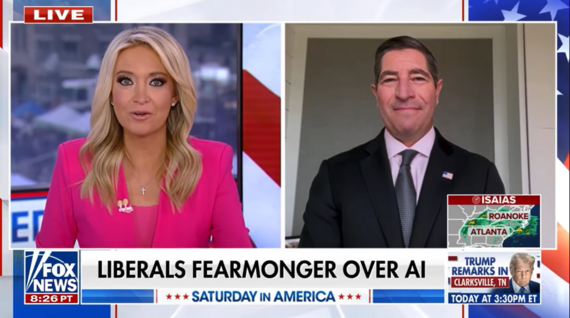
On the task force’s dual mandate:
“We’ve got a dual mandate here. The President has been very clear that this is a race we are winning and need to win, and that it’s critical to Americans’ economic and national security for Americans. But he’s also said we have to do so responsibly. That’s a lot of what we’ve been discussing at the task force: How do we allow the technology to continue in and appropriate way while also protecting the best interests of the American people? I’m absolutely confident we can square those two goals.”
On addressing SI safety risks:
“Those very same people were also predicting a jobs apocalypse about 18 months ago. The opposite has happened: We’ve actually had a huge increase in jobs as a result of SI.
“Nonetheless, we take this seriously. The answer, though, is not to slow down or pause. That’s the absolute worst thing we can do. All that does is inure to the benefit of our adversaries, China foremost among them.
“We’ve been very clear with [model providers] that they have a key fundamental responsibility to put out safe products. If they deem a product isn’t safe, the answer is to slow its release, not put it out and just pray for good times.”
On company responsibility and incident response:
“Companies have a responsibility from a technology perspective to develop the security tools. Second, they have an obligation to respond and notify the government when these things happen. In cases like the Philadelphia one you mentioned, those are things that should have happened immediately. We’ve been very clear with those vendors that they need to do that and be an active part of remediation if something happens.
“A lot of this is about setting the right expectations with companies, making sure the government has all the information it needs, and making sure other critical infrastructure providers, like financial services companies, are fully in the loop if something happens.”
On the risk of falling behind:
“We believe this is the most important economic and national sovereignty tool that will govern international relationships for the next 30, 40, 50 years. If we lose this race to China, or suspend or slow down our efforts, all we do is encourage an adversary to have economic control over our future, as well as control over our national sovereignty and security control.
“I’m confident there’s a way to square these two problems: winning the race and doing so in a responsible way.”