





HR Career Advancement, Pay, and Benefits
Compensating America's HR professionals
Pay, Benefits, and Career Advancement in the Federal civil service are distinct. Advancement and pay grades are highly structured. Not all agencies have the same pay systems and structures, but most HR work in most agencies is based on the traditional General Schedule model that prescribes certain pay amounts based on one’s pay grade, step, and geographic location. OPM publishes pay tables (2026) that illustrate the system.
The General Schedule (GS) consists of 15 pay grades and 10 steps. Most entry-level HR positions for individuals with no prior creditable federal experience in the “GS-0201 HR Management” Occupational Series begin at the GS-5, GS-7, or GS-9 early career levels, in Step 1 (note that pay grades 6, 8, and 10 are typically leapfrogged). The starting point depends on what the Job Opportunity Announcement offers and one’s experience and/or education at the time of application. While some professionals remain at these early career grades, many advance into the mid-grades of GS-11 and GS-12 through non-competitive career ladders or by competing for promotional opportunities. Higher grade - GS-13, GS-14, and GS-15 - are held by a smaller number of HR professionals and are most often attained through competitive promotion. Depending on the organization, GS-12 or GS-13 may represent the highest non-supervisory grade, with advancement beyond those levels typically requiring movement into supervisory or managerial roles or, where available, senior expert positions such as non-supervisory GS-14 roles. In other organizational structures, these grades may be considered mid-level. Regardless of grade, employees who are not promoted continue to progress through step increases within their current grade every one, two, or three years until reaching Step 10, with lower steps advancing faster than higher steps. Pay grades reflect the scope and level of responsibility of a position. Roles focused on field operations or service delivery may be graded differently than headquarters positions that emphasize policy development, strategy, and institutional leadership.
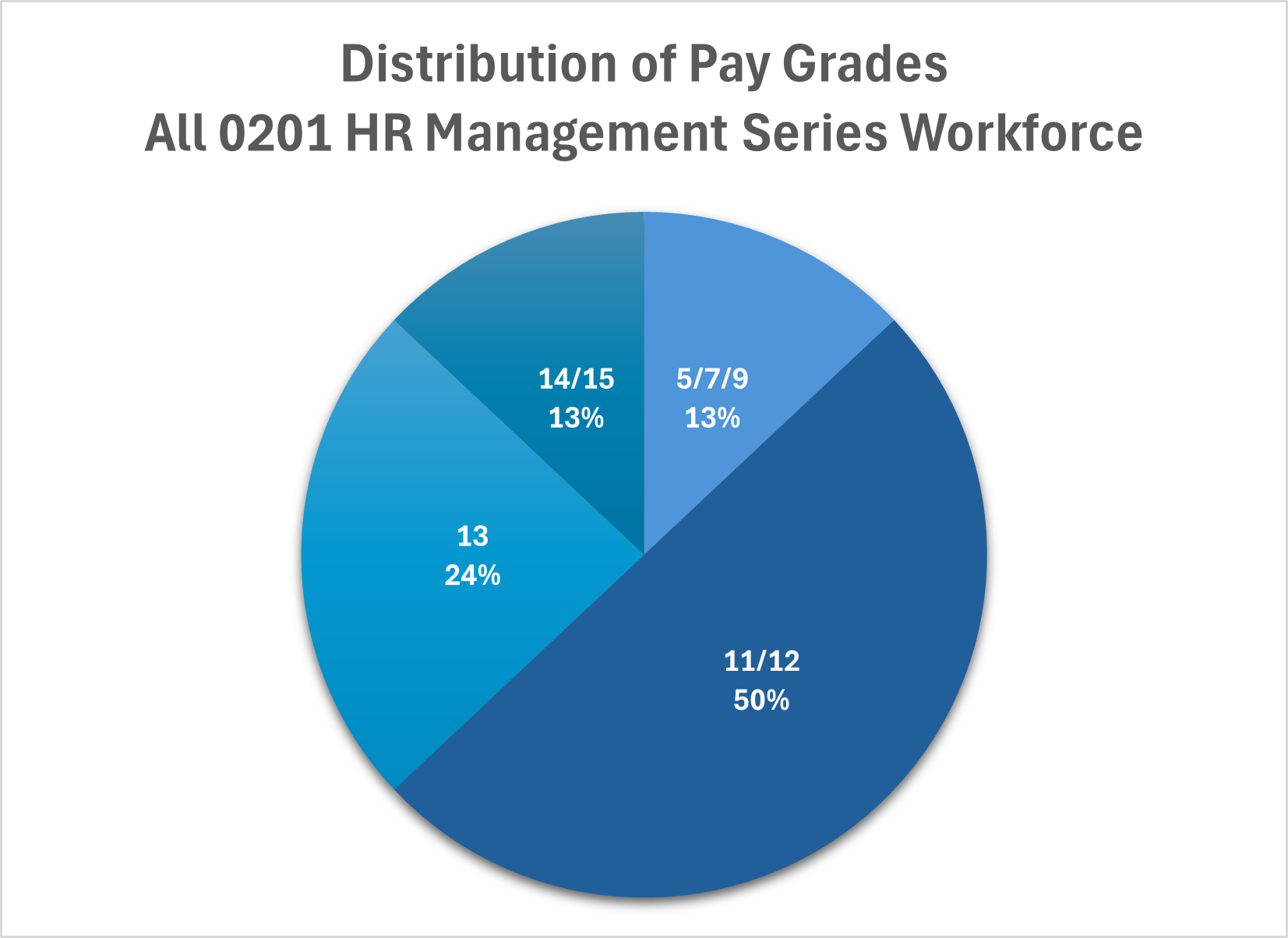
Using the 2026 Washington, DC area pay tables, the example below shows a possible pay progression for a new HR professional hired into a career ladder position with a GS-12 full performance level. This example reflects a typical progression, but advancement is not guaranteed.
- Year 1: GS-7, Step 1 ($57,736)
- Year 2: GS-9, Step 1 ($70,623)
- Year 3: GS-11, Step 1 ($85,447)
- Year 4: GS-12, Step 1 ($102,414)
- Year 5 and beyond: Progression through GS-12 steps and eligibility to compete for higher-level positions (GS-13 and above)
Note: This example is for illustrative purposes only. Actual pay progression may vary by agency, office, position, and individual performance. Promotions are not guaranteed.
Benefits
Most federal employees receive the following benefits:
- Personal leave days for vacation
- 11 paid holidays per year
- 13 paid sick days per year
- Wide choice of health insurance programs
- Flexible work schedules (if authorized)
- Fully portable Thrift Savings Plan (similar to a 401K) with matching contributions up to 5%
- Non-taxable Flexible Spending Accounts for out-of-pocket medical or dependent care expenses
- Paid training
- Transportation subsidy
- Life and long-term care insurance options
Learn more about federal benefits and leave polices here